
 ALA
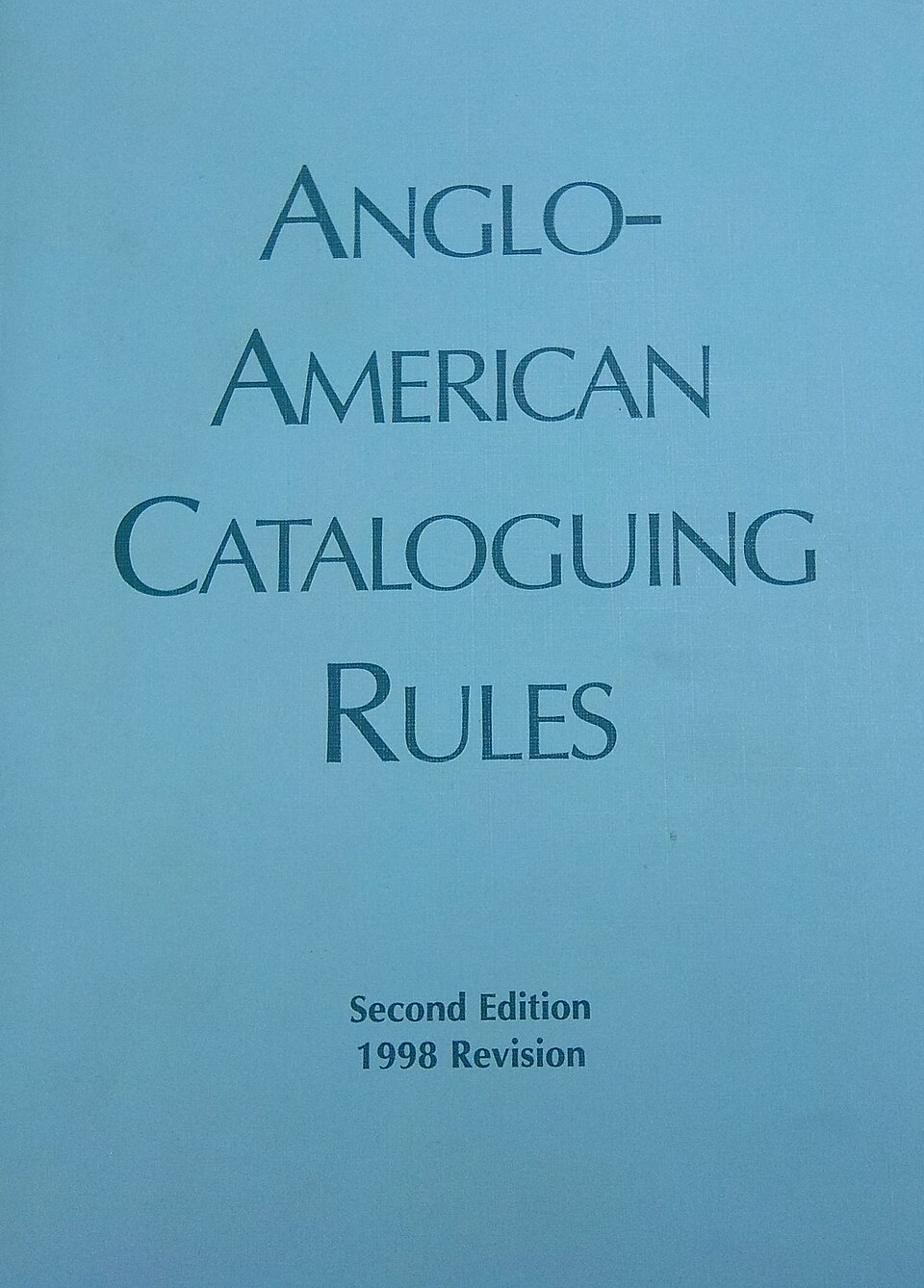
ALAFor over three decades, AACR2 was the principal cataloguing code used by libraries throughout the English-speaking world. It shaped how millions of bibliographic records were created, determining the form of headings, the structure of descriptions, and the rules by which library users could discover materials. Though now superseded by Resource Description and Access (RDA), its influence on modern cataloguing practice remains substantial.
Background
The original Anglo-American Cataloguing Rules were published in 1967, emerging from a transatlantic collaboration intended to unify cataloguing practice across British and North American libraries. The first edition, however, shipped in two divergent texts -- a North American version and a British one -- reflecting unresolved differences between the two traditions.
The second edition (AACR2), published in 1978 and edited by Michael Gorman and Paul W. Winkler, unified the two texts into a single international standard. It adopted British spelling conventions (hence "cataloguing") and aligned the rules with the International Standard Bibliographic Description (ISBD). Subsequent revisions appeared in 1988 and 1998, with a major set of updates in 2002 that improved treatment of non-book materials. All updates ceased in 2005 when plans for a third edition were abandoned in favor of developing an entirely new standard.
Purpose and Scope
AACR2 provided comprehensive rules for constructing bibliographic descriptions and establishing access points (headings) in library catalogs. Its scope encompassed:
- Descriptive cataloguing: Rules for recording the physical and bibliographic characteristics of library resources, organized by material type (books, serials, cartographic materials, sound recordings, visual materials, electronic resources, and more).
- Access points: Rules for determining the form of personal names, corporate body names, geographic names, and uniform titles used as headings in catalog records.
- Chief source of information: The principle that cataloguing should be based on the item "in hand," with a defined hierarchy of preferred information sources for each material type.
The rules were jointly published by the American Library Association, the Canadian Library Association, and the UK Chartered Institute of Library and Information Professionals (CILIP). They were available in print, a concise edition, and an online version, with translations into numerous languages.
Governance and Maintenance
AACR2 was maintained by the Joint Steering Committee for Revision of AACR (later renamed the Joint Steering Committee for Development of RDA), with representation from national library associations and major national libraries in the English-speaking world. Rule revision proposals went through a formal review process involving constituent bodies.
Transition to RDA
The proliferation of digital formats and the rise of electronic publishing in the early 2000s exposed fundamental limitations in AACR2's framework, which had been designed primarily around physical library materials. Plans for an AACR3 were abandoned in 2005, and the international cataloguing community instead developed Resource Description and Access (RDA), a new standard informed by the IFLA Functional Requirements for Bibliographic Records (FRBR) conceptual model.
RDA was released in June 2010 and subsequently tested by the Library of Congress, the National Library of Medicine, the National Agricultural Library, and national libraries of other English-speaking countries. Key differences include the elimination of abbreviations, replacement of the General Material Designation (GMD) with content, media, and carrier type descriptions, and a more flexible framework suitable for digital environments. Most major libraries completed their transition from AACR2 to RDA during the 2013-2015 period.
Related Standards
- Resource Description and Access (RDA): The direct successor to AACR2, designed for the digital environment.
- MARC 21: The encoding standard commonly used to transmit AACR2-created bibliographic data.
- International Standard Bibliographic Description (ISBD): The descriptive framework that AACR2 adopted for structuring bibliographic records.
- FRBR (Functional Requirements for Bibliographic Records): The conceptual model that informed RDA's design as AACR2's replacement.